

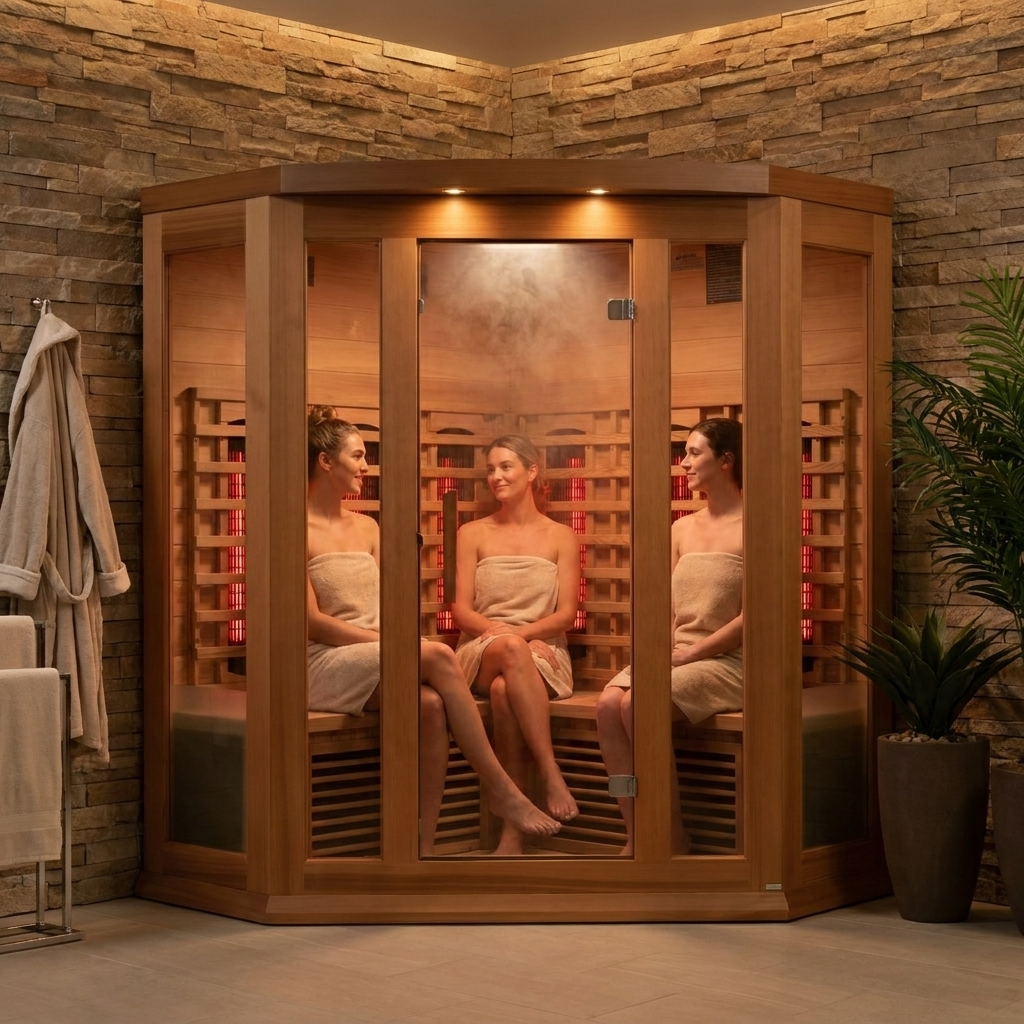
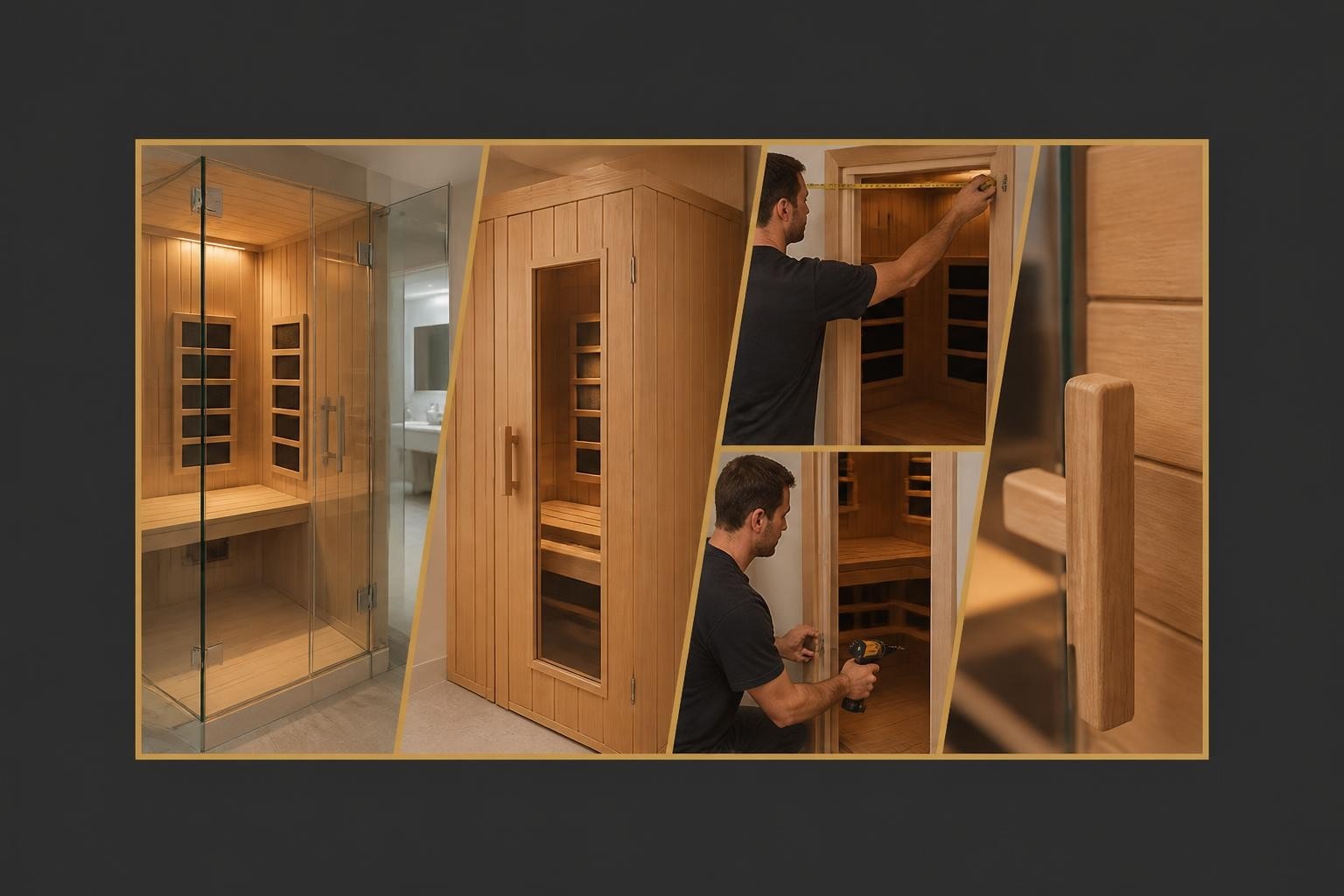
Your sauna door is the critical barrier between relaxation and disappointment. This single component determines heat retention efficiency, safety compliance, and the overall aesthetic appeal of your home wellness space. Whether you're building a custom sauna from scratch or upgrading an existing infrared sauna cabinet, understanding the nuances of door selection, installation, and materials will transform your investment into a truly effective recovery sanctuary. The right door choice impacts everything from energy costs to user safety, making it one of the most important decisions in your sauna project.
Understanding Sauna Door Materials and Their Performance
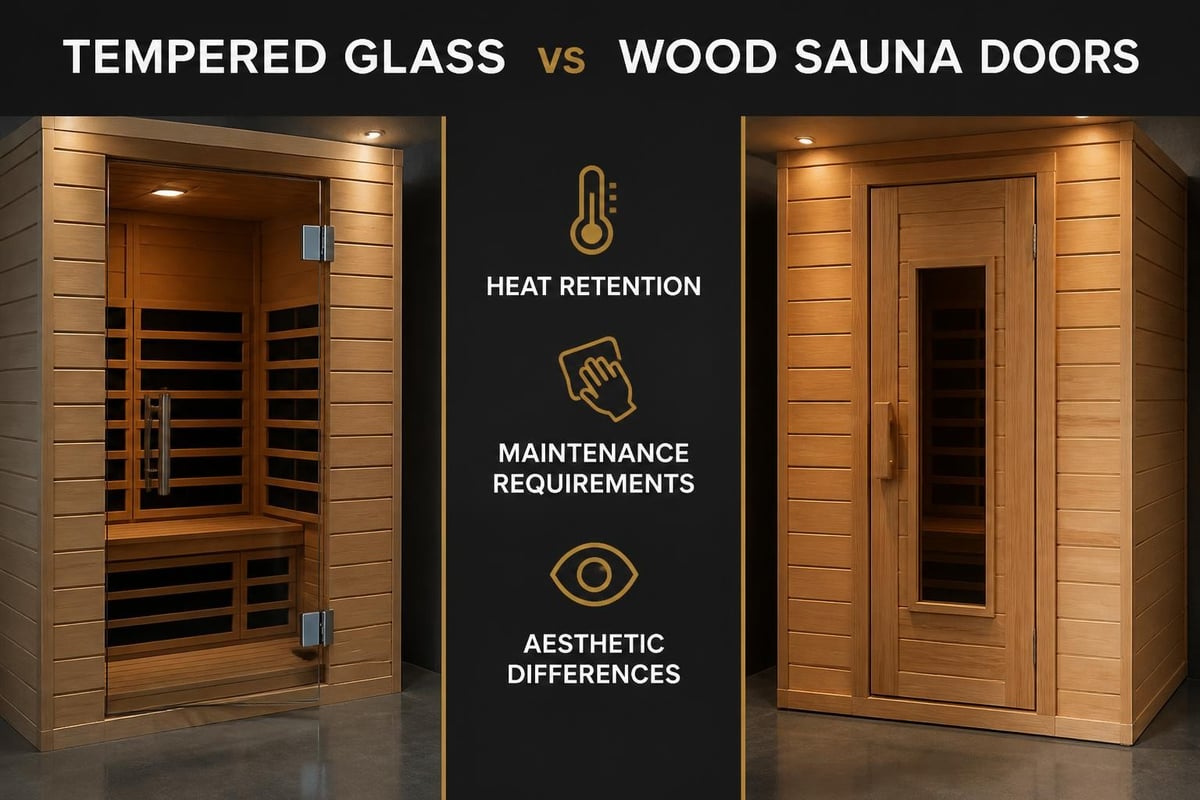
The material you select for your sauna door directly influences heat retention, durability, and maintenance requirements. Glass and wood represent the two primary categories, each offering distinct advantages that align with different priorities and design preferences.
Tempered Glass Doors for Modern Infrared Saunas
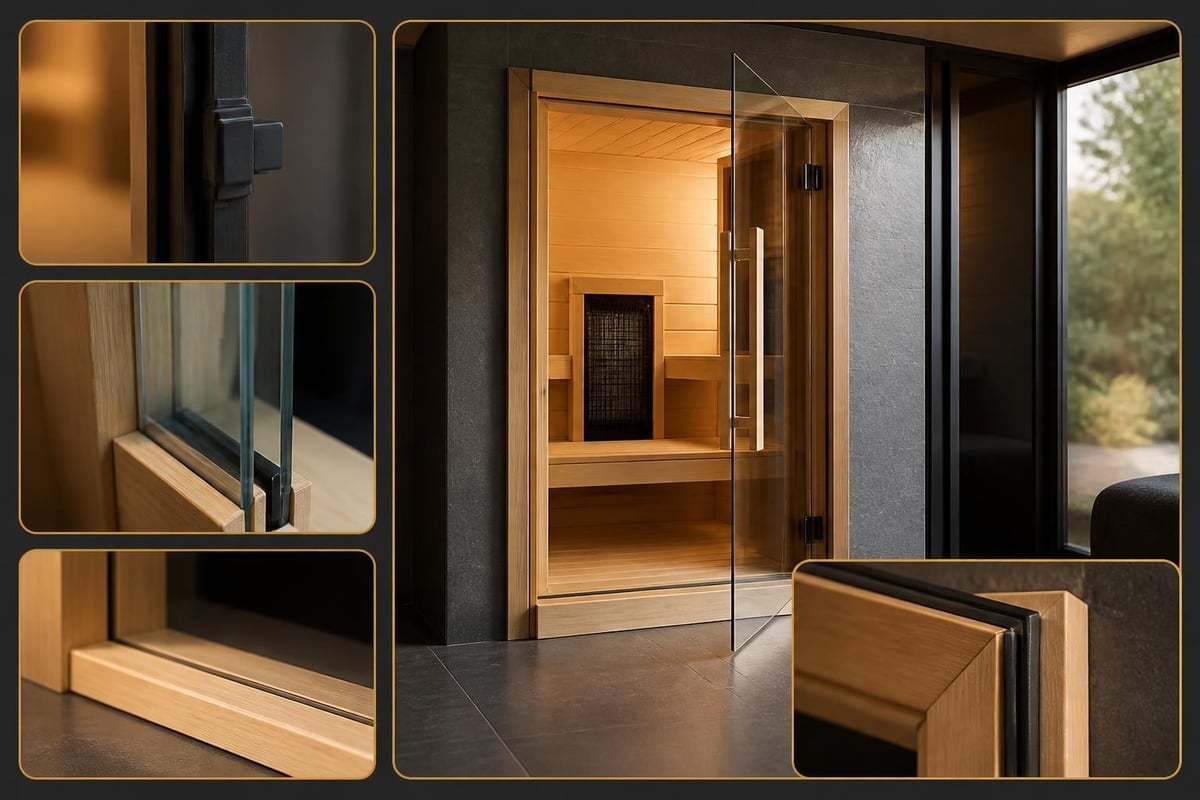
Tempered glass sauna doors have become the standard in modern infrared sauna design, particularly for home installations. These doors provide exceptional visual appeal while maintaining structural integrity under temperature fluctuations. The transparency allows natural light to enter the sauna cabin, creating an open, inviting atmosphere that reduces feelings of claustrophobia.
Key benefits of glass sauna doors include:
- Superior heat visibility allowing users to monitor sessions without opening the door
- Easy cleaning with standard glass cleaners
- Resistance to warping, cracking, or moisture damage
- Modern aesthetic that complements contemporary home design
- Long-term durability with minimal maintenance
Glass thickness matters significantly for safety and insulation. Most quality infrared saunas feature 8mm tempered glass as the minimum standard, with premium models incorporating bronze or gray tinted options that add elegance while slightly reducing heat loss. The Monaco 6-person infrared sauna showcases how bronze tinted tempered glass can elevate both functionality and visual appeal in larger sauna installations.
Traditional Wood Doors and Their Unique Advantages
Wood sauna doors remain popular for traditional sauna builds and custom projects where authentic aesthetics take priority. Canadian Hemlock, Nordic Spruce, and Cedar represent the most common wood choices, each selected for specific properties related to heat resistance and moisture management.
Wood doors excel in heat retention when properly sealed and maintained. The natural insulation properties of wood create an effective thermal barrier, though this advantage requires ongoing care to prevent warping or cracking. According to expert guidance on sauna door materials, wood doors require regular inspection of seals and hinges to maintain optimal performance.
| Material Type | Heat Retention | Maintenance Level | Lifespan | Visual Style |
|---|---|---|---|---|
| Tempered Glass | Excellent | Low | 15+ years | Modern/Contemporary |
| Canadian Hemlock | Very Good | Moderate | 10-15 years | Traditional |
| Nordic Spruce | Good | Moderate | 8-12 years | Classic |
| Cedar | Very Good | High | 10-15 years | Rustic/Premium |
The choice between glass and wood often comes down to your specific sauna type. Infrared saunas typically perform better with glass doors due to lower operating temperatures and the visual benefits of transparency, while traditional steam saunas may benefit from the enhanced insulation wood provides.
Critical Sizing and Dimension Requirements
Proper sauna door sizing determines both safety compliance and heat efficiency. Standard residential sauna doors typically measure 24 inches wide by 72 inches tall, though variations exist based on sauna capacity and layout design.
Standard Dimensions and Custom Considerations
The relationship between door size and sauna cabin volume directly impacts heat retention performance. Oversized doors create unnecessary heat loss, while undersized openings create safety concerns and accessibility challenges. Detailed sauna door sizing guidelines emphasize matching door dimensions to sauna capacity rather than following arbitrary standards.
Common sauna door sizes by capacity:
- Single-person saunas: 20-22 inches wide
- Two-person saunas: 24 inches wide
- Three to four-person saunas: 26-28 inches wide
- Larger group saunas: 30-32 inches wide
- ADA-compliant installations: Minimum 32 inches wide
For infrared sauna installations in homes, the compact footprint of models like the Orivon Wellness Lumin 2-person sauna demonstrates how manufacturers optimize door sizing for modern living spaces without sacrificing comfort or safety.
Accessibility and ADA Compliance Factors
When designing saunas for accessible use, door width becomes a critical compliance factor. The Americans with Disabilities Act establishes minimum requirements for doorway clearance, with ADA-accessible sauna design standards specifying 32-inch minimum clear width for wheelchair access.
Beyond width, threshold height and door swing direction impact accessibility. Flush thresholds eliminate tripping hazards, while outward-swinging doors ensure users can exit easily regardless of mobility limitations. These considerations apply equally to home installations where future accessibility needs might arise.
Installation Techniques and Safety Requirements
Installing a sauna door correctly ensures optimal heat retention, user safety, and long-term performance. The installation process varies between pre-built infrared sauna units and custom-built sauna rooms, but fundamental principles remain consistent across all applications.
Pre-Installation Planning and Frame Preparation
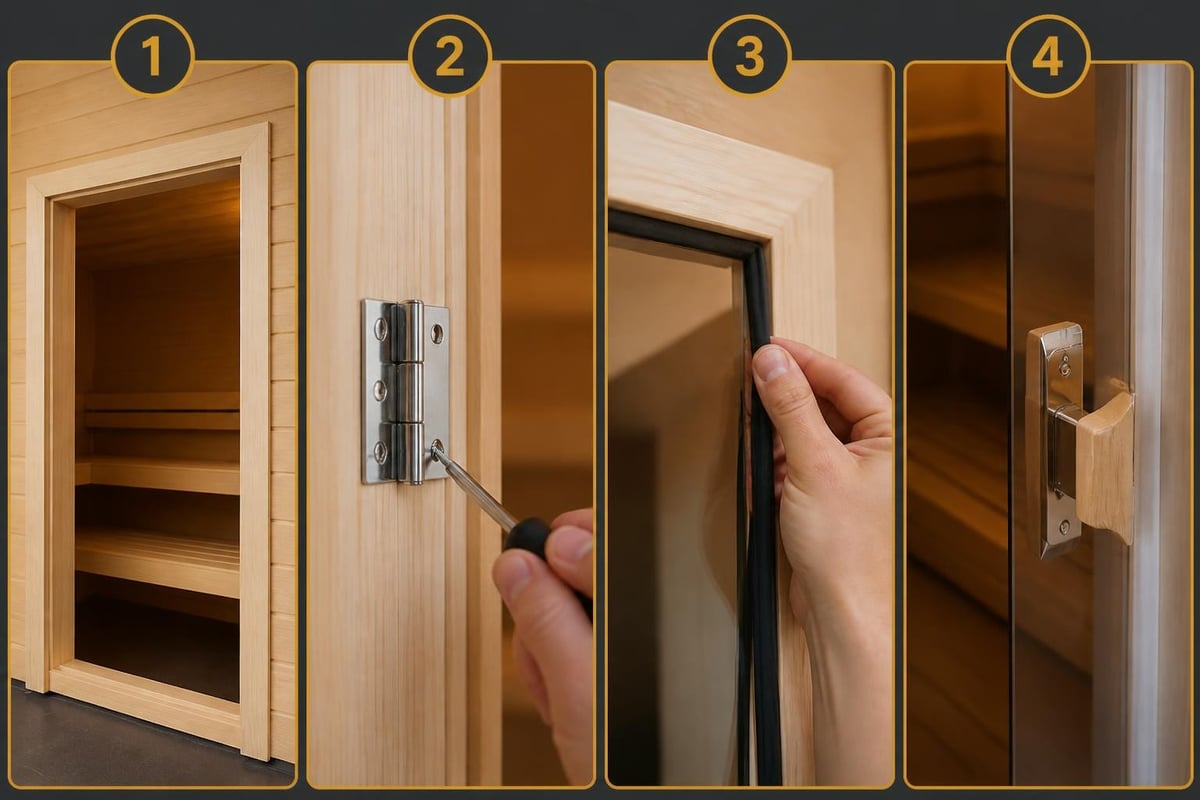
Before mounting any sauna door, frame preparation determines installation success. The door frame must be perfectly square and plumb to prevent binding, gaps, or seal failure. Comprehensive sauna door installation guidance recommends using a level and square at multiple points during frame construction to verify alignment.
Essential pre-installation checklist:
- Verify frame dimensions match door specifications exactly
- Check that frame is level, plumb, and square
- Inspect frame material for stability and heat resistance
- Prepare hinge mounting points with pilot holes
- Gather all necessary installation hardware and tools
- Plan door swing direction based on safety codes
For infrared sauna cabins, manufacturers typically provide pre-hung doors that simplify installation significantly. These units arrive with hinges pre-mounted and frames cut to exact specifications, reducing installation time and potential errors.
Hinge Selection and Mounting Best Practices
Sauna door hinges must withstand constant temperature cycling and moisture exposure without failing. Stainless steel hinges represent the only viable option for long-term reliability, as other metals corrode rapidly in sauna environments.
Mounting hinges properly involves securing them to solid framing members, not just surface materials. This ensures the door weight distributes correctly and prevents sagging over time. Most glass sauna doors use continuous piano-style hinges that support the entire door edge, while wood doors typically employ three heavy-duty butt hinges spaced evenly along the door height.
The number of hinges required depends on door weight and dimensions. Glass doors over 70 inches tall generally require continuous hinges, while wood doors may use standard hinges if properly sized and installed.
Heat Retention and Energy Efficiency Features
A sauna door's primary function extends beyond simple entry and exit. Heat retention directly impacts energy consumption, session quality, and operating costs over the sauna's lifetime. Understanding how door design influences thermal performance helps you select components that maximize efficiency.
Seal Technology and Gap Management
The gap between a sauna door and its frame represents the primary source of heat loss in most installations. Quality seals create a compressible barrier that eliminates air movement while accommodating natural wood expansion or minor frame misalignment.
Magnetic seals have revolutionized sauna door performance by creating consistent compression around the entire door perimeter. Unlike traditional weatherstripping that deteriorates quickly under heat exposure, magnetic seal systems maintain effectiveness for years with minimal maintenance.
| Seal Type | Heat Retention | Lifespan | Maintenance | Cost |
|---|---|---|---|---|
| Magnetic Strip | Excellent | 10+ years | Very Low | High |
| Silicone Gasket | Very Good | 5-8 years | Low | Moderate |
| Rubber Weatherstrip | Good | 2-4 years | Moderate | Low |
| Felt Strip | Fair | 1-2 years | High | Very Low |
According to sauna door design essentials, proper seal installation reduces energy consumption by up to 30% compared to poorly sealed doors, making this component worth significant attention during installation or upgrades.
Double-Pane Glass and Insulation Options
Advanced glass sauna doors now incorporate double-pane construction that dramatically improves insulation performance. This design traps an air or inert gas layer between two glass sheets, creating a thermal barrier that reduces heat transfer without adding significant weight or bulk.
For infrared saunas operating at lower temperatures than traditional steam saunas, double-pane glass may provide more insulation than necessary. However, installations in cold climates or unheated spaces benefit substantially from this upgrade. The improved insulation maintains more consistent internal temperatures and reduces recovery time between sessions.
Safety Features and Building Code Compliance
Safety considerations for sauna doors encompass multiple factors from swing direction to handle design. Building codes establish minimum requirements, but best practices often exceed these standards to ensure user protection in all circumstances.
Door Swing Direction and Emergency Exit Requirements
Sauna doors must always swing outward from the sauna cabin interior. This fundamental safety requirement ensures users can exit quickly even if they become disoriented or physically compromised during a session. Detailed analysis of sauna door swing direction emphasizes how this simple design choice prevents potentially dangerous situations where users cannot escape.
Outward-swinging doors also prevent accidental locking situations where fallen objects or physical collapse could block exit. Building codes universally require this orientation for any enclosed heated space, making it non-negotiable regardless of aesthetic preferences or space constraints.
Handle and Latch Design Considerations
Sauna door handles must function reliably at elevated temperatures without conducting excessive heat to user hands. Wood handles remain the traditional choice for this reason, though modern polymer compounds now offer similar insulation properties with improved durability and moisture resistance.
Latching mechanisms should operate without tools from inside the sauna while providing secure closure during sessions. Magnetic latches excel in this application by offering simple operation with no mechanical parts to fail under heat stress. These systems automatically engage when the door closes and release with gentle pressure, eliminating fumbling with traditional door handles.
Push-to-exit mechanisms on interior sides ensure users can always exit regardless of handle condition or latch position. This redundant safety feature provides peace of mind, especially for solo sauna users or those with medical conditions that might affect coordination during sessions.
Design Integration and Aesthetic Considerations
Beyond functional requirements, your sauna door significantly impacts the visual appeal of your wellness space. Coordinating door design with overall home aesthetics creates a cohesive look that enhances property value while maintaining performance standards.
Matching Door Style to Home Design
Contemporary homes with open floor plans and modern aesthetics benefit from glass sauna doors that maintain visual flow and spatial openness. The transparency prevents the sauna from appearing as a closed, isolated box, instead integrating it naturally into the surrounding space.
Traditional or rustic home designs may call for wood doors that echo existing architectural elements. Cedar doors with visible grain patterns complement log homes or cabins, while smooth-finished hardwood doors suit craftsman-style residences. The key involves selecting materials and finishes that feel intentional rather than contrasting awkwardly with surrounding design elements.
Popular design pairings include:
- Modern minimalist homes with clear glass doors and aluminum frames
- Contemporary spaces with tinted glass and brushed steel hardware
- Traditional homes with wood doors featuring decorative glass inserts
- Rustic properties with solid wood doors and wrought iron hardware
- Transitional designs with frosted glass and mixed material frames
Many homeowners installing infrared saunas in master bathrooms or home gyms prefer designs that match existing cabinetry or architectural details, creating a custom-built appearance even with pre-fabricated sauna units.
Privacy Options Without Sacrificing Light
Privacy concerns sometimes conflict with the desire for natural light and visual openness. Several solutions address this challenge while maintaining the aesthetic and functional benefits of glass doors.
Frosted or textured glass provides complete privacy while still allowing light transmission. These treatments obscure direct view into the sauna without creating the closed-in feeling of solid doors. Tinted glass offers graduated privacy levels, with bronze and gray tints providing partial obscuration while maintaining some transparency.
Removable privacy screens or curtains represent another option for situations where privacy needs vary. These additions allow full glass transparency when desired and complete privacy when needed, offering maximum flexibility for shared wellness spaces.
Maintenance and Long-Term Care Strategies
Proper sauna door maintenance extends lifespan, preserves appearance, and ensures continued safe operation. The specific care requirements vary significantly between glass and wood doors, making it essential to follow material-appropriate procedures.
Glass Door Cleaning and Inspection Protocols
Glass sauna doors require minimal maintenance compared to wood alternatives, but regular cleaning prevents mineral deposits and maintains clarity. Weekly cleaning with standard glass cleaner and a soft cloth removes sweat residue, mineral deposits from steam, and fingerprints.
Monthly inspection of seals, hinges, and mounting hardware identifies potential issues before they affect performance. Look for:
- Seal compression uniformity around entire door perimeter
- Hinge tightness and smooth operation without binding
- Hardware corrosion or loosening
- Glass clarity without etching or permanent staining
- Magnetic latch engagement strength
Annual professional inspection provides additional assurance, particularly for heavily used saunas or installations in commercial settings. Professional technicians can identify subtle issues that might escape casual observation.
Wood Door Preservation Techniques
Wood sauna doors demand more intensive maintenance to prevent warping, cracking, or rot. Monthly application of sauna-specific wood sealants protects against moisture damage while allowing wood to breathe properly. These specialized products differ significantly from standard wood sealers designed for furniture or exterior applications.
Temperature cycling causes wood expansion and contraction that can stress joints and hardware. Quarterly inspection of door construction identifies loose joints, splitting panels, or hardware movement before they compromise door integrity. Professional guidance on sauna construction from the North American Sauna Society emphasizes preventive maintenance as the key to decades of reliable wood door performance.
Sanding and refinishing every 3-5 years restores wood doors to like-new condition while providing opportunity to address any structural issues that have developed. This maintenance cycle maintains appearance while ensuring continued safe operation.
Upgrading Existing Sauna Doors
Many homeowners with older saunas or basic infrared units eventually consider door upgrades to improve performance, aesthetics, or both. Understanding when upgrades make sense versus when replacement becomes more practical helps optimize your investment.
When Replacement Makes Sense
Door replacement becomes cost-effective when existing doors show significant wear, fail to maintain proper seals, or no longer meet safety standards. Visible warping in wood doors, failed seals causing heat loss, or damaged glass all justify replacement rather than repair attempts.
Upgrading from wood to glass doors transforms sauna aesthetics while potentially improving heat retention and reducing maintenance requirements. This conversion requires frame modifications in most cases, adding complexity and cost compared to like-for-like replacement.
Safety code changes sometimes mandate door replacements in older installations. If your existing door swings inward, lacks proper emergency exit features, or fails to meet current building codes, replacement becomes necessary rather than optional.
DIY Versus Professional Installation
Sauna door installation falls within capable DIY skill sets for those with basic carpentry experience and proper tools. Step-by-step installation guides provide detailed instructions that walk through the entire process from frame preparation through final adjustments.
However, professional installation offers advantages that often justify the additional cost:
- Warranty protection requiring certified installation
- Precise alignment ensuring optimal seal performance
- Code compliance verification
- Proper hardware selection and mounting
- Time savings for busy homeowners
For pre-fabricated infrared sauna units like those available through specialty retailers, professional installation ensures manufacturer warranties remain valid while guaranteeing proper operation from day one. The modest installation cost provides significant peace of mind compared to potential issues arising from improper DIY installation.
Specialized Door Solutions for Unique Applications
Some sauna installations require doors beyond standard residential specifications. Accessibility needs, space constraints, or specific use cases demand specialized solutions that maintain safety and performance while addressing unique challenges.
Corner Unit and Space-Saving Designs
Corner sauna installations present unique door placement challenges. The Maxxus 3-person corner infrared sauna demonstrates how manufacturers optimize door angles for corner placements without compromising entry ease or heat retention.
Sliding doors offer space-saving alternatives in tight installations where outward swing isn't practical. However, sliding mechanisms require careful seal design to prevent heat loss along the track. These doors work best in larger saunas where the reduced opening width doesn't create accessibility concerns.
Bi-fold doors represent another space-efficient option, though they introduce additional complexity in seal design and hardware maintenance. The multiple pivot points require regular inspection and adjustment to maintain proper operation and prevent air leakage.
Large Format and Commercial Applications
Commercial saunas and large residential installations often require oversized doors to accommodate high user volumes and diverse accessibility needs. These applications demand more robust construction, heavier-duty hardware, and enhanced safety features compared to standard residential doors.
Multiple-door configurations serve very large saunas, though this approach complicates heat retention and increases installation complexity. Careful attention to seal overlap points prevents heat loss while maintaining the operational simplicity users expect.
The largest residential saunas, such as eight-person accessible models, incorporate wider doors that accommodate wheelchairs and other mobility devices while maintaining the outward-swing safety requirement. These installations showcase how thoughtful design addresses accessibility without compromising performance.
Selecting and installing the right sauna door transforms your wellness investment from adequate to exceptional, ensuring years of safe, efficient operation in your home recovery space. Whether you prioritize the modern elegance of tempered glass, the traditional warmth of wood construction, or specialized features for accessibility, understanding these essential factors empowers confident decision-making. INFRIUM offers premium infrared saunas featuring carefully selected doors and components designed for optimal performance, along with expert guidance to help you create the perfect home wellness sanctuary. Explore our collection today and discover how the right sauna enhances your daily recovery routine.
Share:
Saunas Near Me to Use: Your Complete 2026 Guide
Sauna Portable Amazon: Smart Buying Guide 2026